FPS-per-value, cooling, and screen quality—ranked for real-world play
A good gaming laptop isn’t just about the GPU. The best picks feel smooth because they balance performance, cooling, and a screen that matches the FPS you’re actually getting. Below are five highly rated options, ranked with that “real-life gaming” mindset.
Affiliate Disclosure: As an Amazon Associate, I earn from qualifying purchases.
Quick picks at a glance
- Best overall balance (FPS + thermals + display): #3 Acer Nitro V (Core i7 + RTX 4050, 165Hz)
- Best premium experience (screen + build feel): #5 Alienware 16 Aurora (WQXGA 120Hz, RTX 5050)
- Best “portable gaming without a dGPU”: #2 NIMO (Ryzen 7 + Radeon 780M)
- Best entry-level dedicated GPU option: #1 Acer Nitro V (Core i5 + RTX 5050, 165Hz)
- Best ultra-basic “very light gaming” laptop: #4 KAIGERR (Intel quad-core)
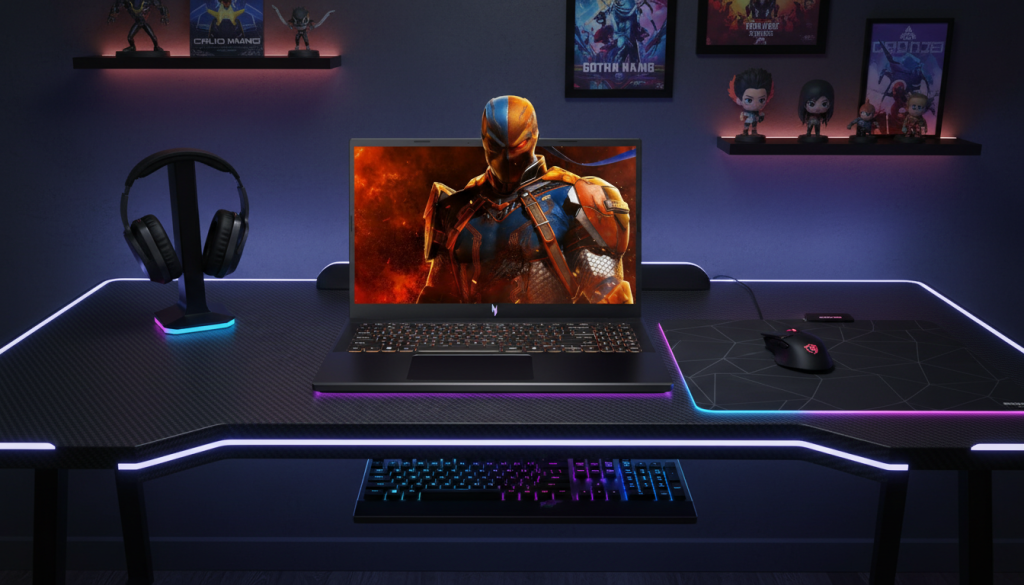
1) Acer Nitro V 15 (15.6″ FHD IPS 165Hz, Core i5-13420H, RTX 5050, 16GB, 512GB)
What it’s best for
A straightforward starter gaming laptop for 1080p esports and modern games with sensible settings—especially if you want a high-refresh screen without going ultra-premium.
Key features that matter
- 165Hz FHD IPS: great for competitive games if you can feed it frames
- Dedicated RTX GPU: the main reason this qualifies as “real gaming”
- i5-13420H: solid gaming CPU for 1080p, especially paired with an RTX-class GPU
Pros
- Smooth-feeling display for fast games (165Hz)
- Dedicated GPU = far better gaming headroom than iGPU-only laptops
- A practical spec mix for 1080p
Cons (honest)
- Budget gaming chassis usually means fans get loud under load
- SSD size is fine, but game libraries grow fast—storage management becomes a “thing”
- Performance depends heavily on the laptop’s GPU power limit (common in this class)
My take
If you want “real gaming laptop vibes” without paying for a premium brand build, this is a strong baseline pick—just expect audible fans in performance mode.
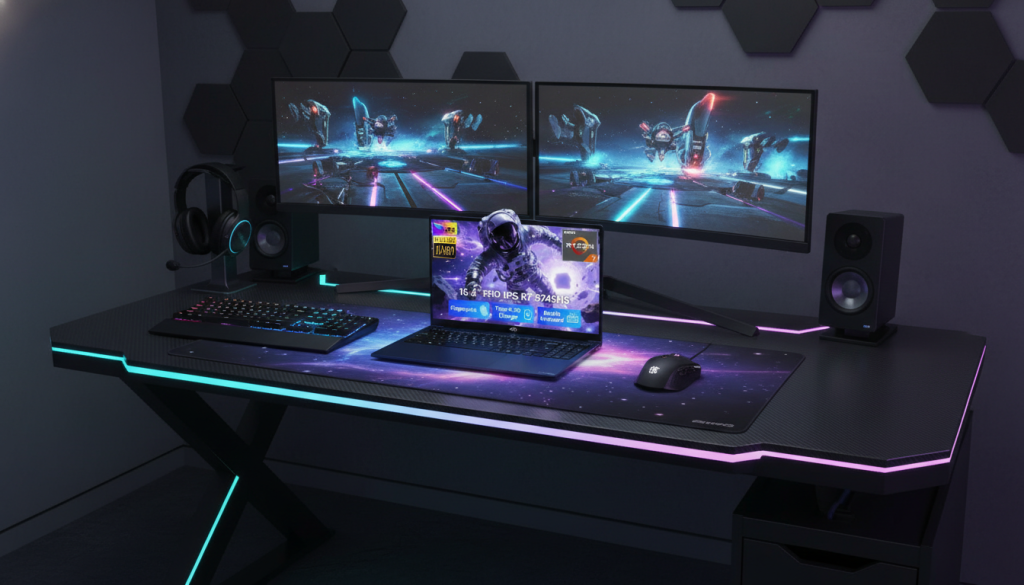
2) NIMO 15.6″ Light Gaming (FHD, Ryzen 7 8745HS, Radeon 780M, 16GB DDR5, 512GB)
What it’s best for
Hybrid users who want a laptop that feels good for work, stays relatively efficient, and can still game—especially esports titles and lighter games—without a dedicated GPU.
Key features that matter
- Radeon 780M iGPU + DDR5: one of the better “no-dGPU” gaming combos
- Ryzen 7 HS-class CPU: strong for multitasking and productivity
Pros
- Often more “daily friendly” than bulky gaming laptops (noise/heat behavior tends to be easier to live with)
- Great for 1080p esports with tuned settings
- Typically better battery behavior than full dGPU gaming rigs (varies by configuration)
Cons (honest)
- For demanding AAA games, you’ll rely on Low/Medium settings + upscaling, and sometimes resolution drops
- No dedicated GPU means less headroom for future titles
- Cooling is still important—thin designs can throttle if pushed hard
My take
This is the “I mostly work but I want to game sometimes” pick. If you’re realistic about settings, it can be surprisingly satisfying.
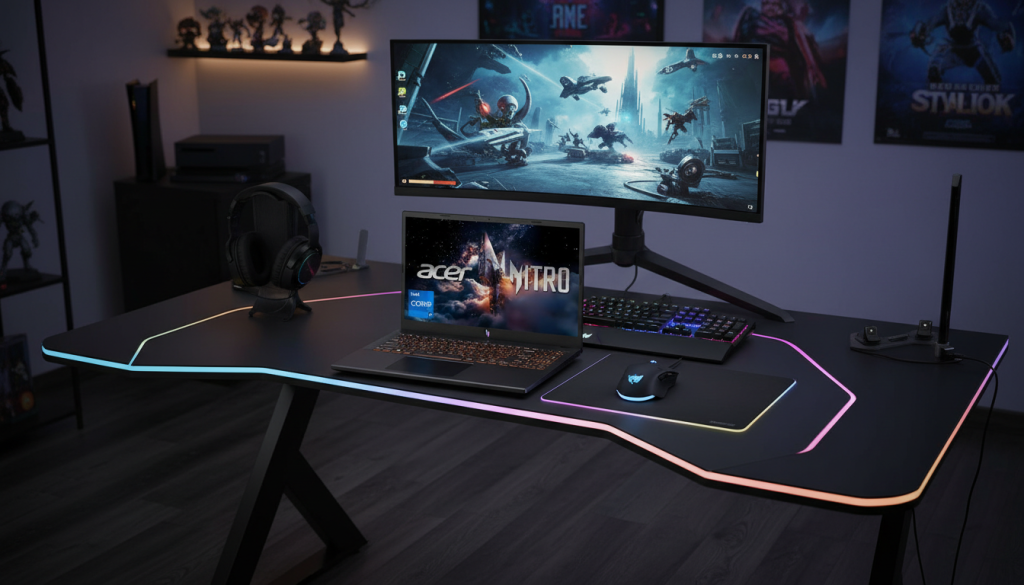
3) Acer Nitro V (15.6″ FHD IPS 165Hz, Core i7-13620H, RTX 4050, 16GB DDR5, 1TB)
What it’s best for
The best FPS-per-value balance for most gamers who want strong 1080p performance, a fast screen, and enough storage to avoid constant cleanup.
Key features that matter
- RTX 4050: a proven 1080p gaming-class GPU
- Core i7-13620H: strong CPU headroom for higher FPS and smoother 1% lows
- 165Hz FHD IPS: matches the “competitive 1080p” mission
- 1TB SSD: a real quality-of-life upgrade for modern game installs
Pros
- Best overall balance of performance + screen + practicality in this list
- 165Hz feels great in shooters and fast action games
- 1TB storage = fewer compromises and less uninstall/reinstall pain
Cons (honest)
- Like most gaming laptops, it can run warm/loud in turbo modes
- Actual performance can vary based on GPU wattage and cooling tuning
- Speaker quality and trackpad feel on budget gaming lines can be “just okay” (typical trade-off)
My take
If you want one recommendation that makes sense for most people, this is it. It’s the kind of spec combo that stays enjoyable longer.
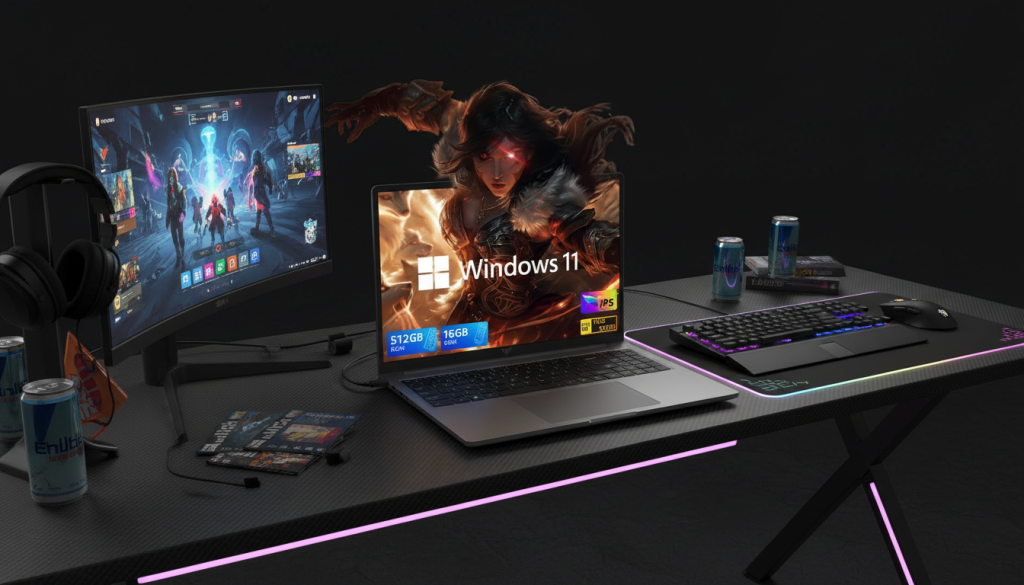
4) KAIGERR 15.6″ (FHD, Intel 12th-gen quad-core, 8GB DDR4, 256GB SSD)
What it’s best for
Very light gaming (think older titles, indie games, or low-demand esports) and general use—not a “push high settings” gaming machine.
Key features that matter
- 8GB RAM: the biggest limiter for modern gaming and heavy multitasking
- Small SSD: workable for basics, tight for game libraries
Pros
- Good for casual use and simple gaming needs
- Portable, simple setup
Cons (honest)
- 8GB RAM can cause stutters in modern games and heavy browser multitasking
- Storage fills fast
- Integrated graphics limits performance ceiling
My take
This is a “starter laptop that can play some games,” not a true gaming laptop. If gaming is a priority, treat this as the fallback option.
5) Alienware 16 Aurora (16″ WQXGA 120Hz, Intel Core 7-240H, RTX 5050 8GB, 16GB DDR5, 1TB)
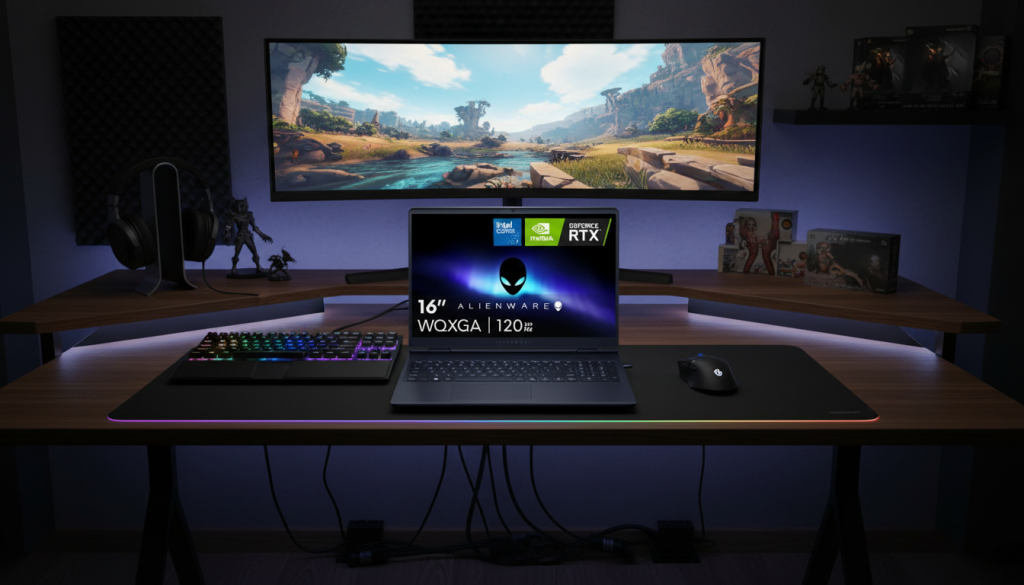
What it’s best for
A premium-feeling setup where the screen experience and overall polish matter, and you want strong gaming performance with a more elevated build/brand ecosystem.
Key features that matter
- 16″ WQXGA (higher than 1080p) + 120Hz: sharper image and a premium feel
- RTX 5050 8GB: solid modern GPU class on paper
- 1TB SSD: practical for big installs
Pros
- Higher-resolution display looks excellent for games and productivity
- 120Hz is a good match for smoother gameplay without chasing extreme FPS
- Typically stronger “premium laptop” vibe (keyboard feel, chassis, support options—depending on model configuration)
Cons (honest)
- Higher resolution can demand more GPU power—sometimes you’ll choose upscaling or 1080p/1200p-style settings in heavier games
- Premium gaming laptops are rarely the lightest or quietest when pushed
- You’re paying for the overall experience, not just raw FPS
My take
If you care about a sharper display and a more premium feel, this is the “nice to own” pick—especially if you’re fine using upscaling in demanding titles.
Side-by-side: which one should you choose?
If you want the best all-around gaming laptop
Pick #3 (Acer Nitro V i7 + RTX 4050).
It’s the most complete mix of strong 1080p gaming, high-refresh screen, and practical storage.
If you want the most premium display experience
Pick #5 (Alienware 16 Aurora).
WQXGA + 120Hz is a sweet spot for sharpness and smoothness.
If you want gaming without a dedicated GPU (more “daily laptop” feel)
Pick #2 (NIMO Radeon 780M).
Great for esports and light-to-medium gaming without committing to a heavy gaming chassis.
If you want entry-level dedicated GPU gaming
Pick #1 (Acer Nitro V i5 + RTX 5050).
A good step into “real gaming laptop” territory.
If you only need very light gaming
Pick #4 (KAIGERR).
Just keep expectations realistic: light titles, lighter settings.
The optimal choice (overall winner)
✅ Acer Nitro V (Core i7-13620H + RTX 4050, 165Hz)
It’s the best “most people should buy this” option because it balances FPS, cooling expectations for the class, and a screen that matches competitive gaming, without leaning too far into premium pricing.
Real-world setup tips (makes any of these feel better)
- Cap FPS (60 for story games, 120/144 for esports) to reduce heat and fan noise
- Use Balanced/Silent mode for work; Performance/Turbo only when gaming plugged in
- Enable DLSS/FSR/XeSS when available—big FPS gains with minimal quality loss
- Keep at least 15–20% free SSD space to avoid slowdowns