Color accuracy, VRAM, and export times—compared honestly
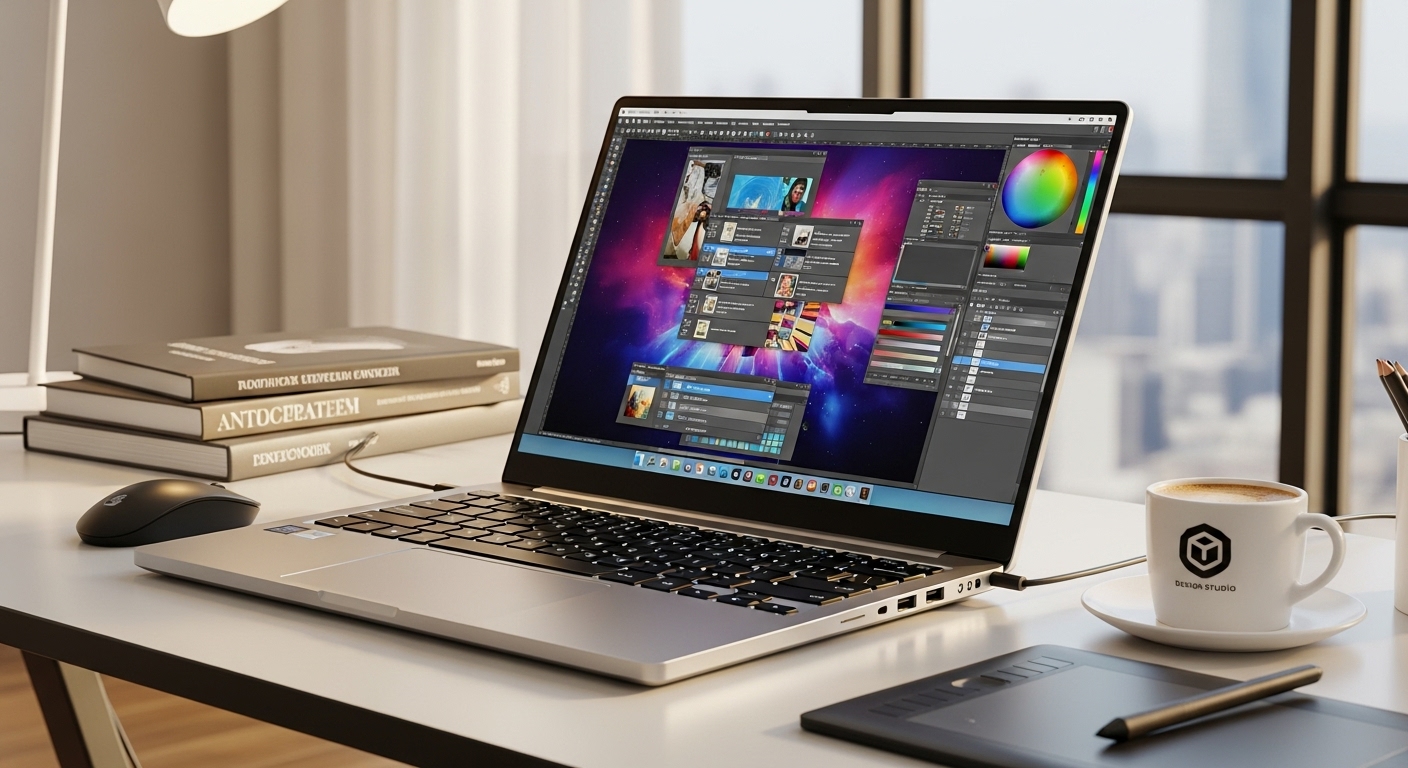
If you do design work all day and 3D (even “sometimes”) at night, the wrong laptop will waste hours: laggy brush strokes, choppy viewports, and exports that feel endless.
This guide compares five top-rated options the way real creators feel it—screen quality, GPU/VRAM headroom, and how fast it finishes work.
Affiliate Disclosure: As an Amazon Associate, I earn from qualifying purchases.
What matters most for design + 3D (quick checklist)
- Color accuracy: look for OLED or wide-gamut panels (at least 100% sRGB; DCI-P3 is even better). If the listing doesn’t state it, assume you’ll want a calibration or an external monitor for serious color work.
- VRAM (GPU memory): for 3D, VRAM is king. Integrated graphics use shared memory and hit limits faster.
- Export times: mostly CPU + GPU acceleration + thermals. Strong parts mean nothing if the laptop throttles.
The Top 5 Picks (in order)
- Lenovo IdeaPad 15.6″ Touch — 10-Core Intel i5, Iris Xe, 40GB RAM, 1TB SSD (+ external storage), Windows 11 Pro
- HP Pavilion 15.6″ Touch — 10-Core Intel i5, 16GB RAM, 1TB SSD (+ external storage), Wi-Fi 6E, Windows 11 Pro
- 15.6″ Laptop (Ryzen 5 7520H) — 32GB RAM, 1TB SSD, Radeon graphics, Windows 11 Pro
- 16″ 16:10 Laptop (Ryzen 3 3250U) — 1920×1200 IPS, 16GB RAM, 512GB SSD, Windows 11 Pro
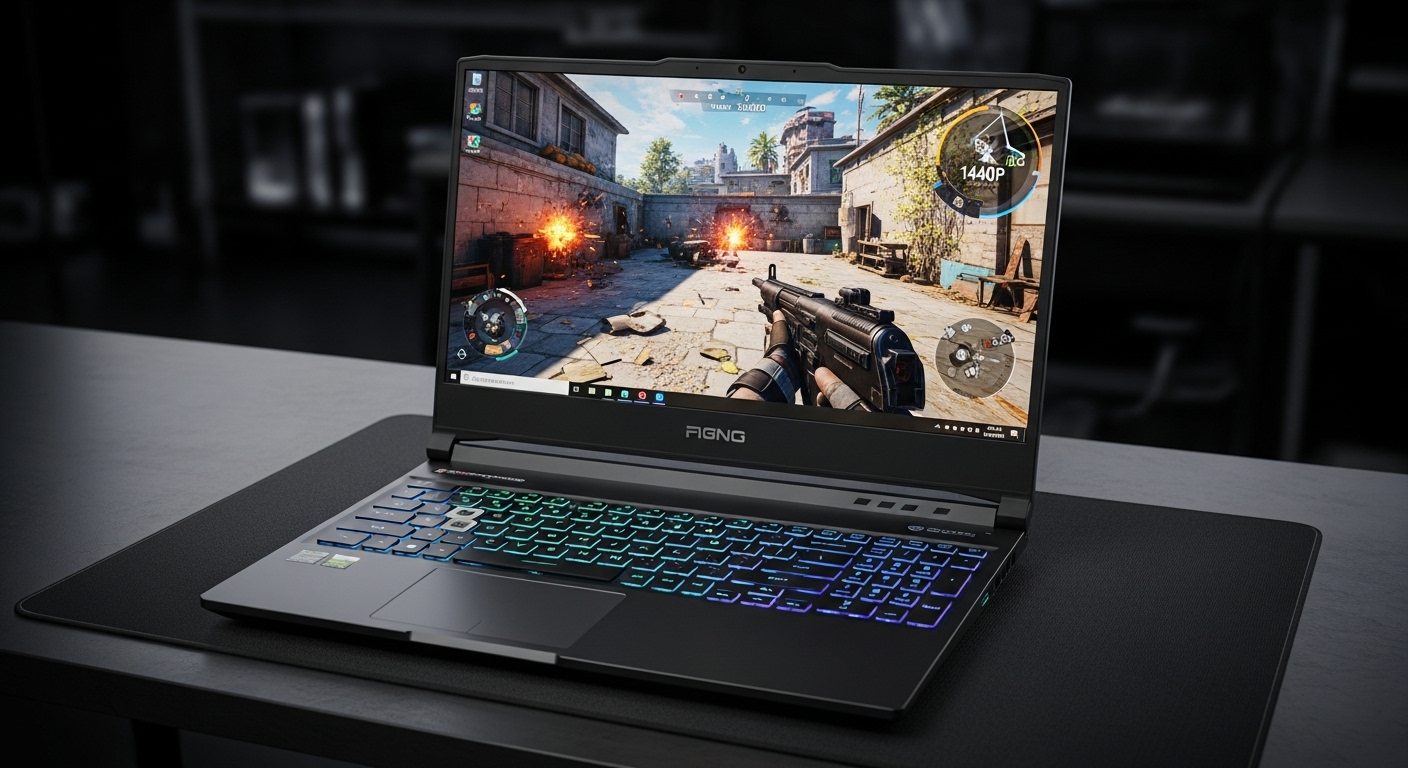
- Acer Predator Helios Neo 16S — Intel Ultra 9 275HX, RTX 5070 Ti, 16″ 2.5K OLED 240Hz, 64GB RAM, 2TB SSD, Windows 11 Pro
Quick comparison (creator reality)
| Pick | Best for | Color workflow | 3D/VRAM headroom | Export speed vibe |
|---|---|---|---|---|
| #5 Acer Predator Helios Neo 16S | Pro design + real 3D | Excellent (OLED class) | Strong (dedicated RTX + VRAM) | Fastest |
| #1 Lenovo IdeaPad (40GB RAM) | Heavy multitasking 2D design | Depends on panel | Limited (iGPU) | Good for 2D/CPU tasks |
| #2 HP Pavilion (16GB RAM) | Everyday design + office | Depends on panel | Limited (iGPU) | Solid general use |
| #3 Ryzen 5 7520H (32GB) | Budget creator + light 3D | Depends on panel | Limited (iGPU) | Fine for light workloads |
| #4 Ryzen 3 3250U (16″) | Student/entry design | Nice 16:10 workspace | Very limited | Slowest for heavy exports |
Individual reviews (honest, real-user style)
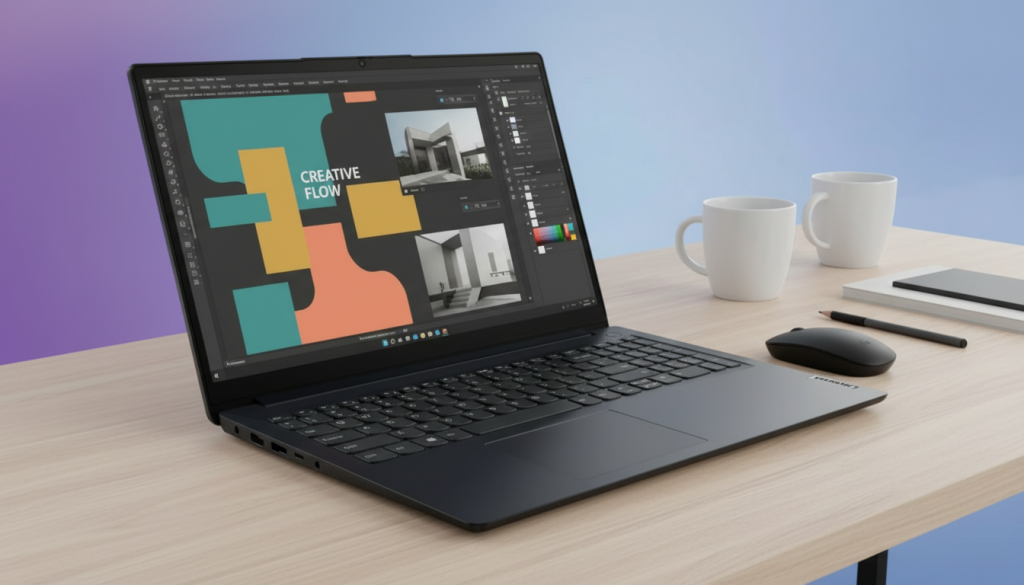
1) Lenovo IdeaPad 15.6″ Touch (i5 + Iris Xe, 40GB RAM)
Best for
Photoshop/Illustrator/Canva/Figma, lots of tabs, and multitasking-heavy workflows (design + docs + references + music + email).
What stands out
- 40GB RAM is the headline here. For 2D design, RAM is what keeps the system from choking when your files get big.
- Touchscreen can be useful for quick zoom/pan, markup, and client review moments.
Pros
- Handles big PSDs and many apps/tabs smoothly (RAM helps a lot)
- Great “all-day productivity creator” feel
- Plenty of storage headroom (bundle-style configs often help creators)
Cons (real talk)
- Iris Xe = integrated graphics, so heavy 3D scenes, complex Blender viewports, and GPU rendering are limited
- Color accuracy isn’t guaranteed unless the panel specs explicitly say so (calibration recommended)
My take
If you’re mostly doing 2D design and multitasking, this can feel faster day-to-day than you’d expect—just don’t buy it for serious 3D rendering.
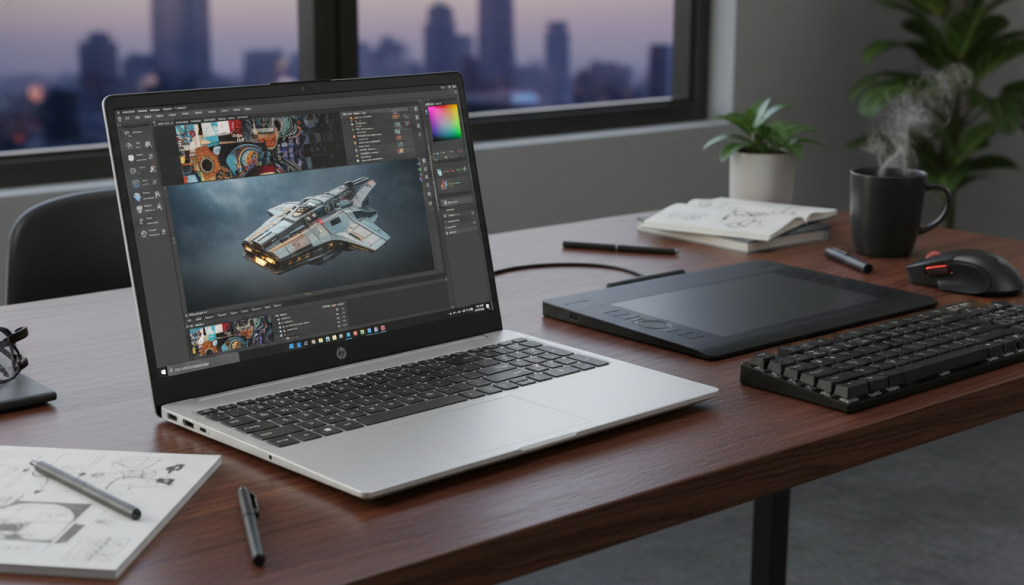
2) HP Pavilion 15.6″ Touch (i5, 16GB RAM)
Best for
Design students and office creators who want a reliable “work + creative” laptop for Adobe basics, social media assets, and light editing.
Pros
- Smooth for general design workloads (2D, light photo editing, web graphics)
- Touchscreen helps with quick navigation and previewing
- Wi-Fi 6E is useful for cloud assets and fast transfers
Cons (real talk)
- 16GB RAM is okay, but heavy Adobe multitasking can hit limits faster than you’d like
- Integrated graphics means 3D is “light duty”
- If “lifetime Office” is included in a bundle, verify licensing details for peace of mind
My take
A safe pick for everyday creator needs—but not the one for heavy 3D or big exports.
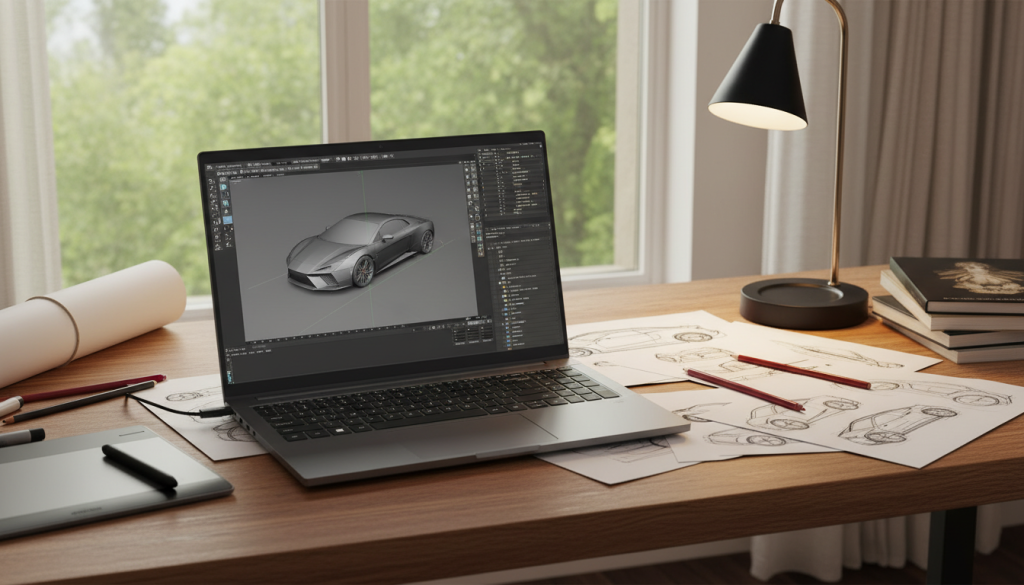
3) 15.6″ Ryzen 5 7520H (32GB RAM, 1TB SSD, Radeon graphics)
Best for
Creators who want lots of RAM + 1TB storage for the basics, and only occasional 3D or beginner motion work.
Pros
- Strong “creator convenience” configuration (RAM + SSD)
- Good for 2D workflows and light editing
- Great if you store lots of assets locally
Cons (real talk)
- Radeon graphics here are likely integrated, so don’t expect strong 3D viewport performance
- Export speed won’t compete with a dedicated RTX creator laptop
My take
A practical creator setup if your 3D work is occasional and you prioritize smooth multitasking.
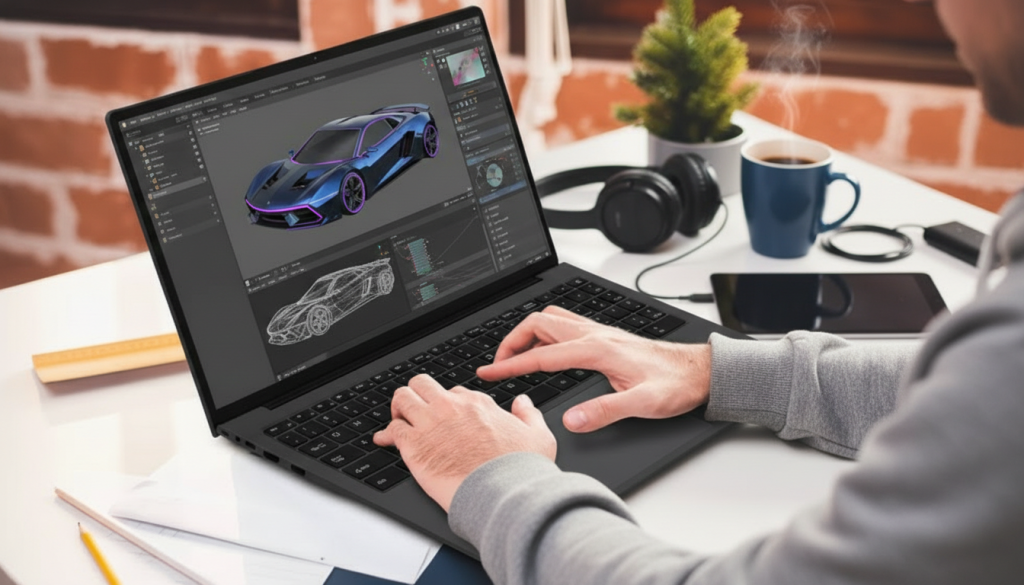
4) 16″ 1920×1200 (Ryzen 3 3250U, 16GB RAM, 512GB SSD)
Best for
Beginner design and school work where you value a bigger workspace (16:10) more than raw speed.
Pros
- 16:10 layout is genuinely nicer for design panels and timelines
- Fine for lightweight design tools and basic projects
Cons (real talk)
- Entry CPU class → slower exports and heavier multitasking
- 3D work will feel limited quickly
My take
Good for learning and basics; easy to outgrow if you get serious.
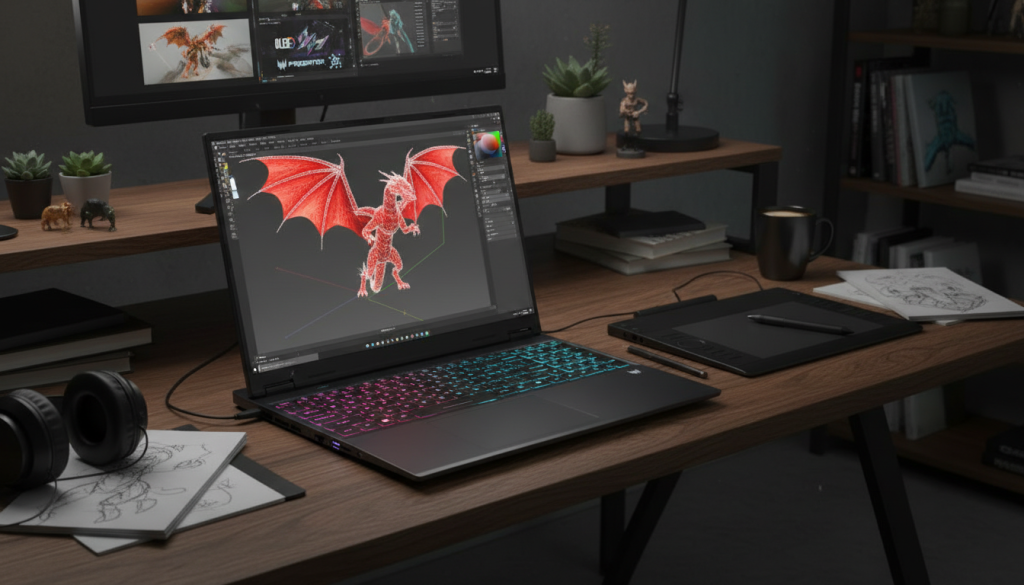
5) Acer Predator Helios Neo 16S (Ultra 9 + RTX 5070 Ti + 2.5K OLED)
Best for
Serious creators doing graphic design + real 3D, including Blender, heavier Photoshop work, and GPU-accelerated editing.
Pros
- Best 3D headroom thanks to dedicated RTX graphics and real VRAM
- OLED-class 2.5K display is a major upgrade for visual work
- Strong for exports and heavy projects
Cons (real talk)
- High-performance laptops can be loud under sustained rendering
- Overkill if you only do light design work
My take
The only option here that fits “Graphic Design & 3D” without big caveats—straightforward winner if 3D matters.
Optimal pick (overall)
✅ Acer Predator Helios Neo 16S
If 3D is a real part of your workflow, dedicated RTX graphics + premium display tier make the difference you actually feel every day.