Real-World Battery + Quiet Fans + Smooth 1080p Gaming
If you need a laptop that feels “normal” for emails, spreadsheets, and Zoom—but can still unwind with games at night—this is the sweet-spot category.
The catch: a lot of listings say “gaming” even when they’re really office laptops with integrated graphics.
Affiliate Disclosure: As an Amazon Associate, I earn from qualifying purchases.
What I looked for (quick + honest)
To earn a spot in an office-to-gaming list, a laptop should ideally have:
- A quiet/balanced mode for office work
- Real battery life for productivity (not just marketing claims)
- 1080p gaming ability (best with a dedicated GPU; iGPU-only is usually “light gaming”)
Below are the products shown in your screenshots, kept in the same order.
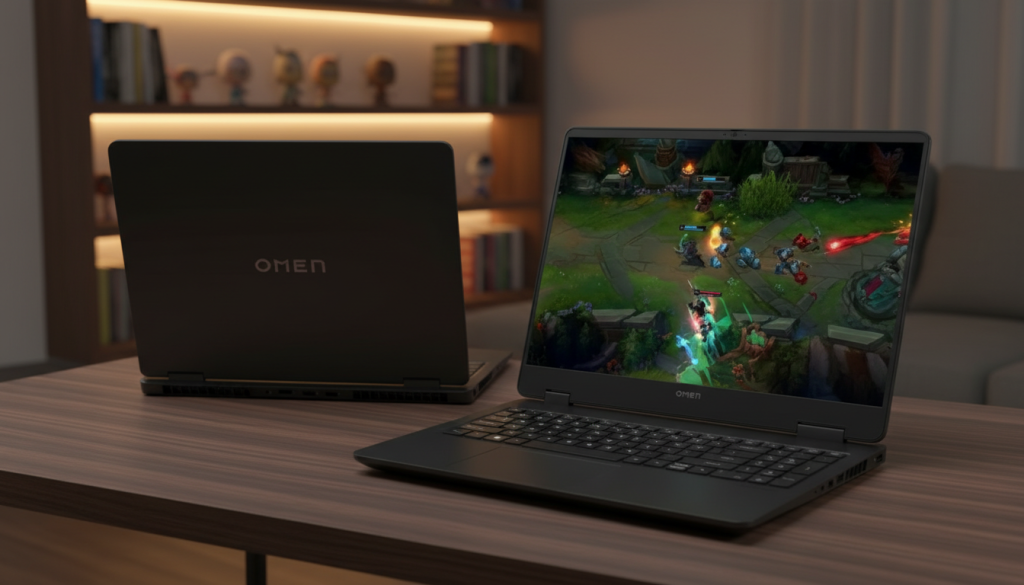
1) HP Omen 16.1″ (Ryzen 9 8940HX + “RTX 5070”, 240Hz, 64GB/2TB)
Quick take
This is the only option in your images that looks like a true “work + real gaming” machine because it’s listed with a dedicated RTX GPU and a high-refresh 240Hz screen.
Key highlights (from the listing)
- 16.1″ WQXGA display, 240Hz
- Ryzen 9 8940HX
- Listed as RTX 5070
- 64GB DDR5 RAM, 2TB SSD
- RGB keyboard, Windows 11 Home (plus a USB-C hub bundle)
Pros
- Best performance by far in this lineup (for gaming, heavy multitasking, and creator work)
- Great screen spec on paper (resolution + refresh)
- 64GB/2TB is overkill in a good way if you keep lots of files/projects
Cons (real talk)
- “Quiet fans” is harder on high-power gaming laptops—expect fan noise under load
- Likely heavier and less “coffee shop stealthy” than the others
- Verify the exact GPU model on the product page and after purchase (some marketplace titles can be messy)
Who it’s best for
You want smooth 1080p gaming (and beyond), plus strong workstation-like specs for office + multitasking.
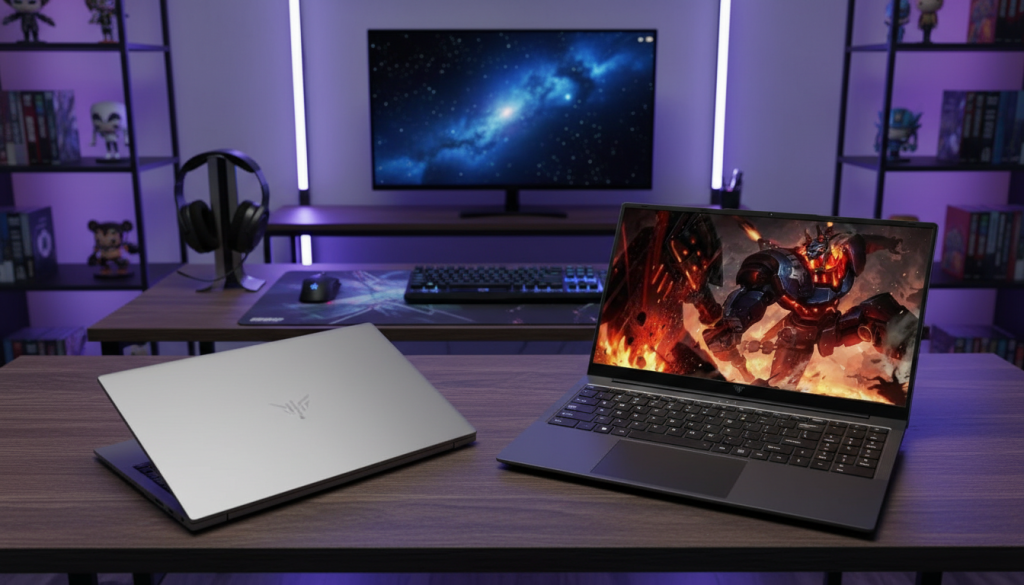
2) MALLRACE 15.6″ (Ryzen 7 7730U, 16GB/512GB, “AMD Radeon Graphics”)
Quick take
This reads like a budget office laptop marketed as “gaming.” Ryzen 7 7730U is fine for productivity, but “AMD Radeon Graphics” here usually means integrated graphics, not a dedicated gaming GPU.
Key highlights (from the listing)
- 15.6″ IPS
- Ryzen 7 7730U (up to 4.5GHz), 16GB RAM, 512GB SSD
- Wi-Fi 6, Windows 11
Pros
- Good everyday CPU for office work, browsing, multitasking
- Likely quieter for office tasks (no big GPU heat to manage)
- Solid “basic laptop” spec set for typical work
Cons
- For gaming: expect esports/light titles, not “smooth 1080p” in demanding games
- SSD is fine, but 512GB fills fast if you install multiple games
Who it’s best for
Office-first users who play light games (Valorant/LoL/Rocket League-type stuff) and want a simple, affordable setup.
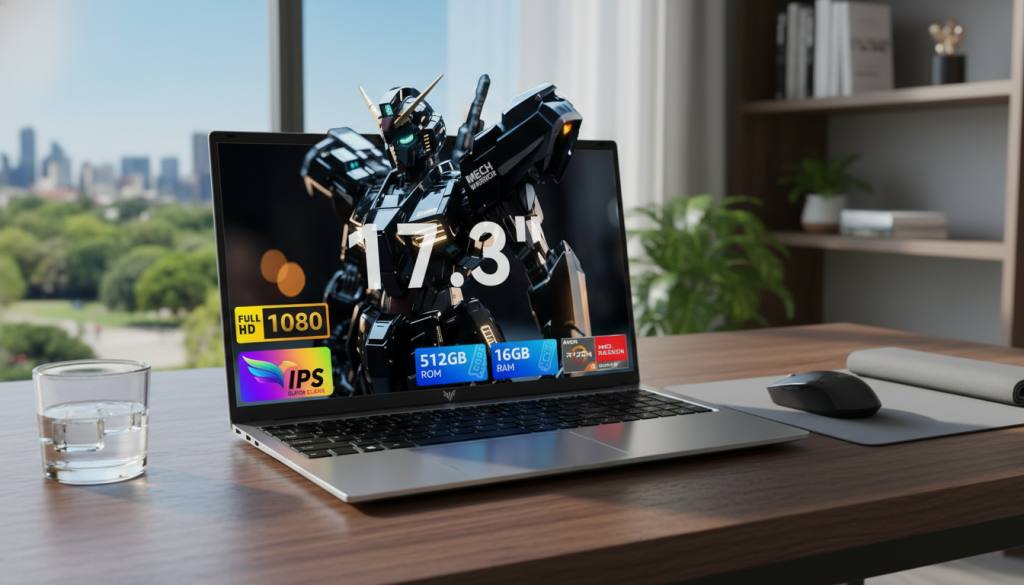
3) MALLRACE 17.3″ (Ryzen 3 4300U, 16GB/512GB, Windows 11 Pro)
Quick take
Big screen, older budget CPU. This is more “home/office big-display laptop” than a gaming pick—despite the “gaming” title.
Key highlights (from the listing)
- 17.3″ display (largest here)
- Ryzen 3 4300U, 16GB RAM, 512GB SSD
- Mentions Type-C and a ~62.7Wh battery, Windows 11 Pro
Pros
- The 17.3″ screen is great for spreadsheets, side-by-side windows, and easier reading
- 16GB RAM is a nice plus at this tier
- Likely quiet for basic tasks
Cons
- Ryzen 3 4300U is not a “gaming” chip by today’s standards
- Integrated graphics = very limited gaming headroom
- Big screen often means bigger chassis; not very travel-friendly
Who it’s best for
If your priority is large screen office work and only occasional very light gaming, this is the “big canvas” option.
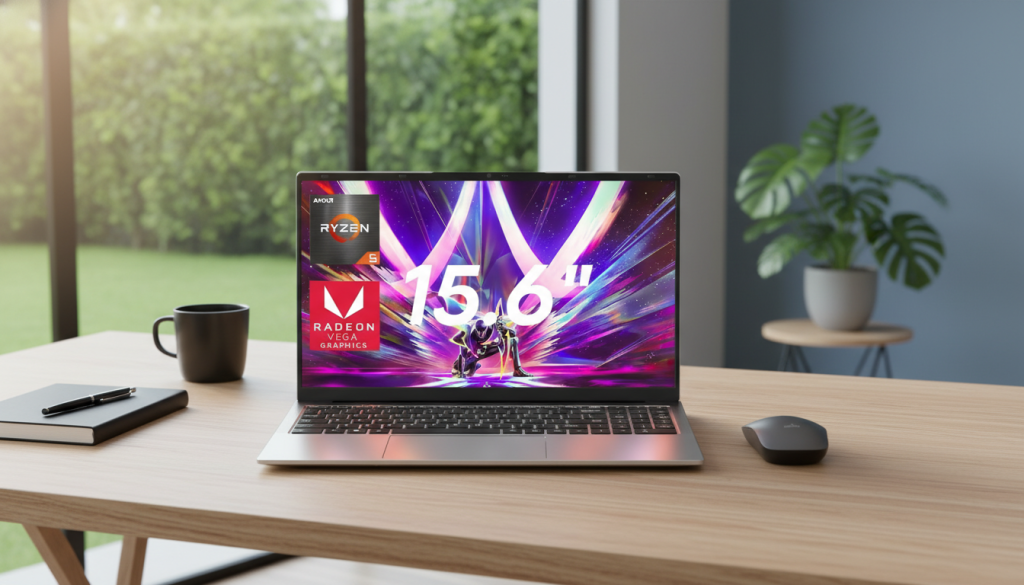
4) jumper 15.6″ (Ryzen 5 7430U, 16GB/1TB NVMe)
Quick take
This is the best value-looking office laptop in your images because it pairs a modern-enough CPU with 16GB RAM and a roomy 1TB SSD—great for work files and a few games. Still likely iGPU gaming.
Key highlights (from the listing)
- 15.6″ FHD IPS
- Ryzen 5 7430U (up to 4.3GHz), 16GB RAM, 1TB NVMe SSD
- 62.7Wh battery, Windows 11
Pros
- 1TB SSD is a big win for long-term usability
- Good “daily driver” specs for office + multitasking
- Likely stays quiet doing normal work
Cons
- Without a clearly stated dedicated GPU, gaming is typically light-to-moderate only
- Don’t buy it expecting high settings in modern AAA games
Who it’s best for
Office-first users who want the most storage and occasional gaming on lighter titles.
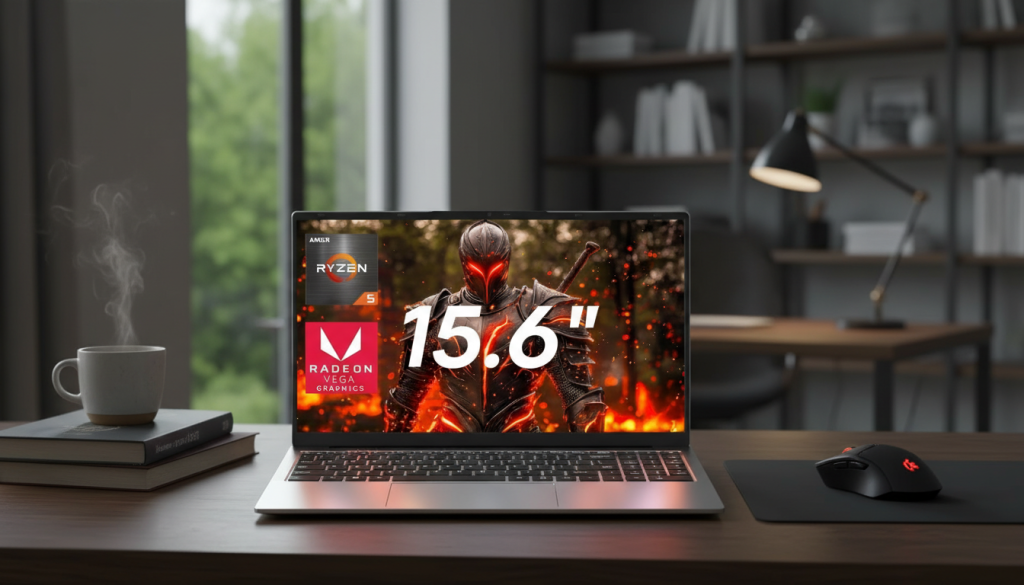
5) jumper 15.6″ (Ryzen 5 7430U, 16GB/1TB NVMe) — same specs, different listing
Quick take
Based on your screenshot, this appears to be the same configuration as #4 (same CPU/RAM/SSD/display/battery), just a different listing/variant.
Pros / Cons
Same strengths and limits as #4—so the “best pick” logic is simple:
- If both are truly identical, choose the better value listing (and prioritize stronger seller reputation + return policy).
Side-by-side comparison (what actually matters)
If you want smooth 1080p gaming
- Pick #1 (HP Omen). It’s the only one clearly positioned as a real gaming-capable machine with an RTX GPU listed.
If you want quiet office work + light gaming
- Pick #4 (jumper Ryzen 5 7430U, 16GB/1TB) for the storage and balanced specs
- Pick #2 (MALLRACE Ryzen 7 7730U, 16GB/512GB) if you care more about CPU headroom than SSD size
If you want a big screen for office
- Pick #3 (MALLRACE 17.3″)—best for comfort and multitasking, not for gaming performance
My “best overall” recommendation (optimal choice)
✅ Best overall for the article title (real office + real gaming): HP Omen 16.1″
If your goal is actually “smooth 1080p gaming” after work, this is the only one in your screenshots that fits the promise without heavy caveats.
✅ Best budget “office-to-light-gaming” value: jumper Ryzen 5 7430U (16GB/1TB)
For most people who mainly work and only play lighter games, the 1TB SSD is the kind of spec that keeps a laptop feeling fast and useful for longer.
Real-world tips to keep fans quiet (works for any of these)
- Use Balanced/Silent mode for office work
- Cap refresh rate to 60Hz on battery (if Windows allows it)
- Turn on Battery Saver during meetings
- In games: cap FPS (ex: 60/90), use Medium settings, and enable upscaling if available