CPU vs GPU rendering, VRAM needs, and thermal limits—explained simply
3D and CAD are the kind of workloads that expose a laptop’s weaknesses fast: viewport lag, long export times, and performance drops once the machine heats up. This guide explains what matters (CPU vs GPU rendering, VRAM, thermals) and reviews four highly rated options in the exact order shown.
Affiliate Disclosure: As an Amazon Associate, I earn from qualifying purchases.
What matters for CAD + 3D (in real use)
CPU vs GPU rendering (quick guide)
- CAD modeling & assemblies: often depends on CPU single-core performance and sustained responsiveness.
- Rendering:
- CPU rendering benefits from more cores and good sustained cooling.
- GPU rendering depends heavily on GPU power + VRAM. If VRAM runs out, performance tanks or scenes fail to render.
VRAM: the “silent limiter”
For serious 3D:
- Dedicated VRAM matters for complex scenes, heavy textures, large assets, and GPU rendering.
- Integrated graphics share system memory and can become a bottleneck fast.
Thermals: the performance you can actually keep
3D work is sustained. A laptop that boosts fast but throttles after 10 minutes will feel slow in real projects. Cooling design often matters as much as specs.
Top Picks
- HP Flagship 15.6″ HD Touch — 6-Core Intel i3, 32GB RAM, 1.5TB storage, Windows 11 Pro
- Lenovo IdeaPad Flagship 15.6″ HD — Intel Dual-Core up to 2.8GHz, 20GB RAM, 1TB SSD + 128GB eMMC, Windows 11 Home
- Dell 16 Touch — Intel Core 7 150U, 16GB DDR5, 1TB SSD, 16″ FHD+ anti-glare, Windows 11 Pro
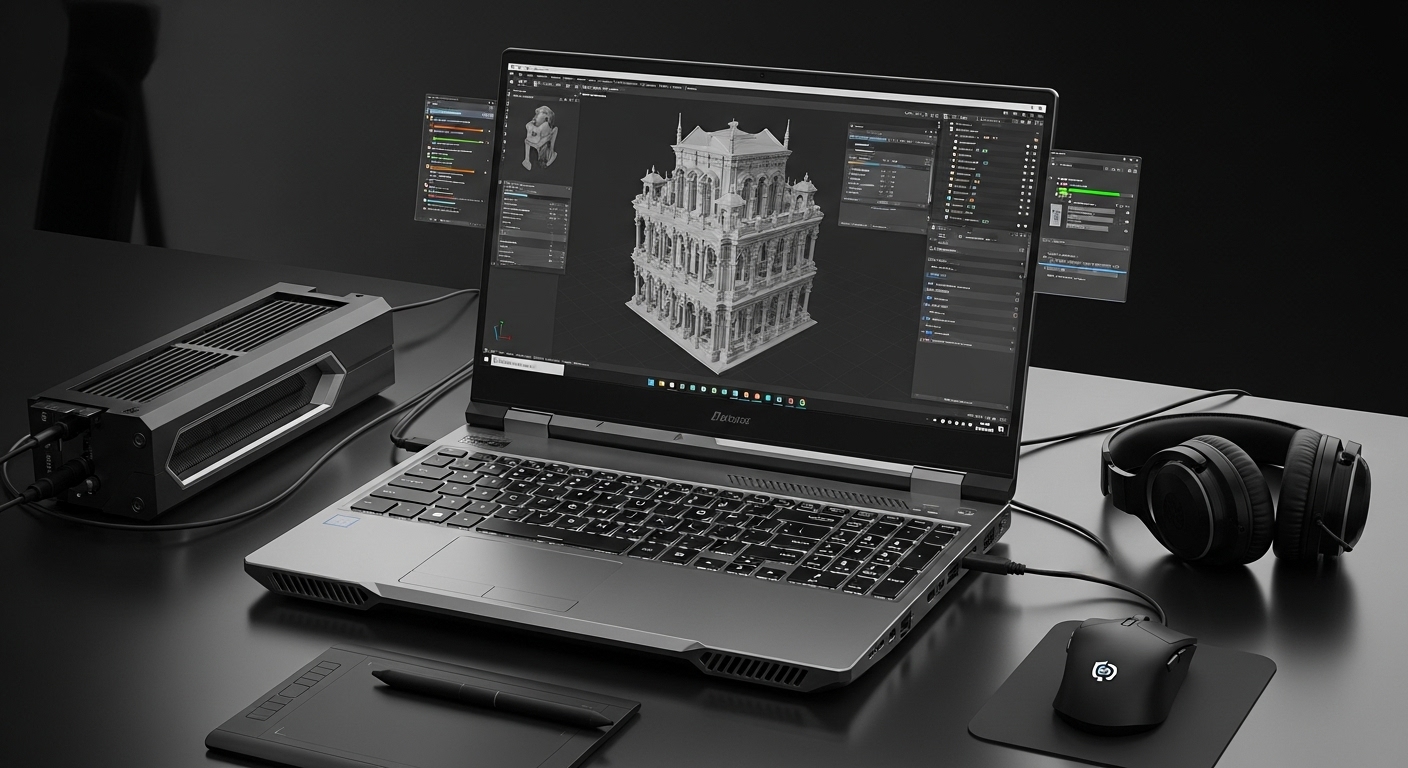
- Lenovo ThinkPad P16 Gen 3 (16″) — Intel Ultra 9 275HX, NVIDIA RTX PRO 2000 (8GB VRAM), 64GB DDR5, 2TB SSD, Windows 11 Pro
Individual Reviews (same order, no rearranging)
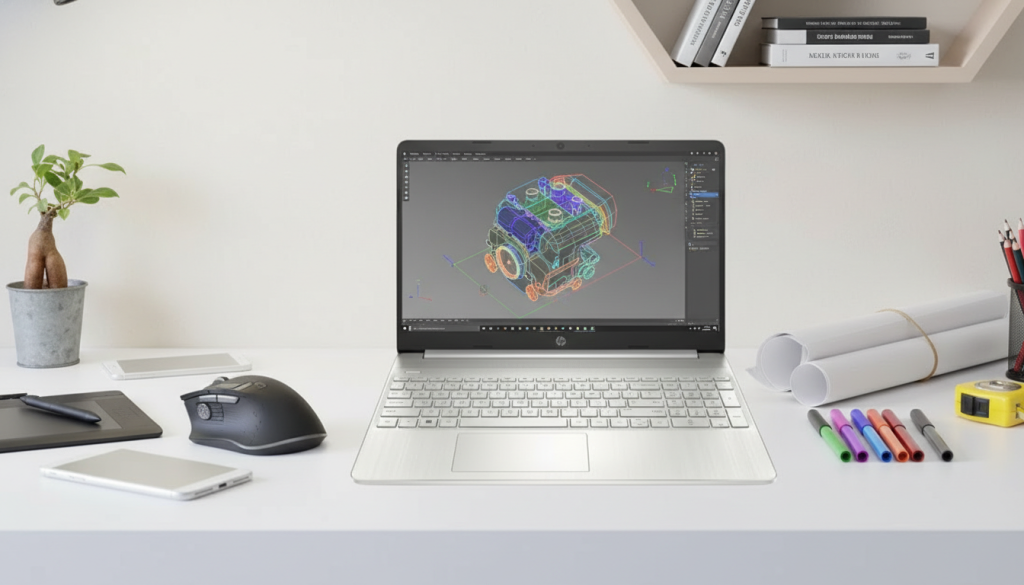
1) HP Flagship 15.6″ HD Touch (6-Core i3, 32GB RAM, 1.5TB storage)
Best for
- Productivity + school + office work
- Light creative tasks and very light CAD viewing/editing (simple projects, learning level)
What it’s like in real use
The big advantage here is 32GB RAM—it helps a lot for multitasking (many tabs, documents, basic Adobe work). For CAD/3D, the limitation is usually graphics power and the overall platform class.
Pros
- 32GB RAM helps keep the system smooth with many apps open
- Lots of storage headroom for files and projects
- Touchscreen is useful for navigation, review, quick markups
Cons (honest)
- Not built for heavy CAD assemblies or 3D rendering
- Integrated graphics typically limits viewport performance in complex scenes
- Exports/renders won’t be fast under sustained heavy loads
My take
A strong “work laptop with extra RAM,” but for serious CAD/3D it’s more of a starter/learning option than a production tool.
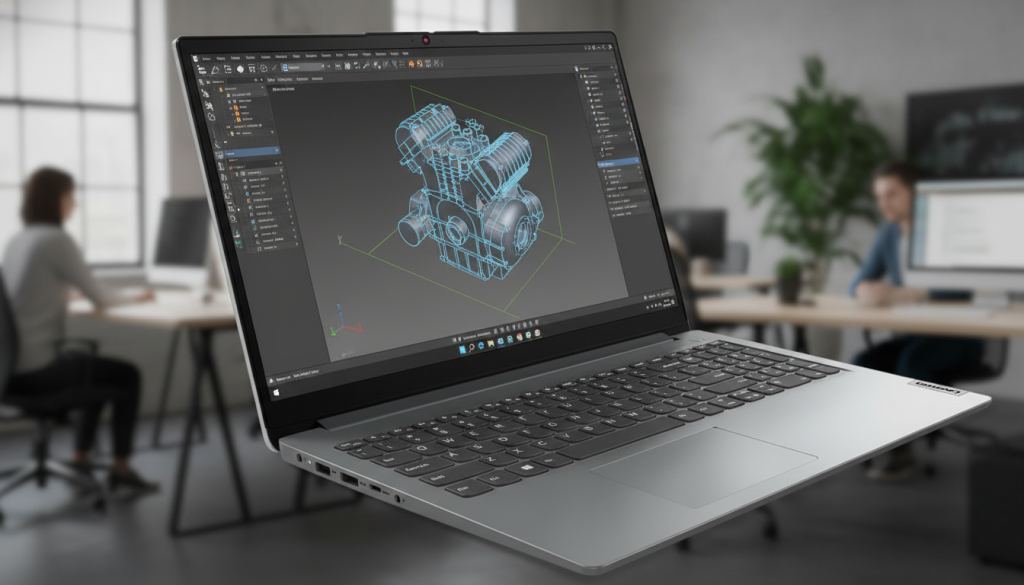
2) Lenovo IdeaPad Flagship 15.6″ HD (Dual-Core, 20GB RAM, SSD + eMMC)
Best for
- Basic everyday tasks, light office use
- Very light design tools or simple CAD viewing (minimal complexity)
What stands out
This configuration leans toward “general use.” The CPU class (dual-core) and typical integrated graphics make it a tough match for CAD/3D workloads.
Pros
- Fine for basic productivity and light tasks
- SSD helps with general snappiness in everyday use
- Decent for simple workflows that don’t push CPU/GPU hard
Cons (honest)
- Dual-core CPU is a major limit for CAD responsiveness and exports
- Integrated graphics = limited 3D viewport performance
- eMMC storage (when used) is slower than SSD—best kept for secondary files
My take
If CAD/3D is your goal, this isn’t where you want to be. It’s best treated as a general laptop, not a 3D/CAD machine.
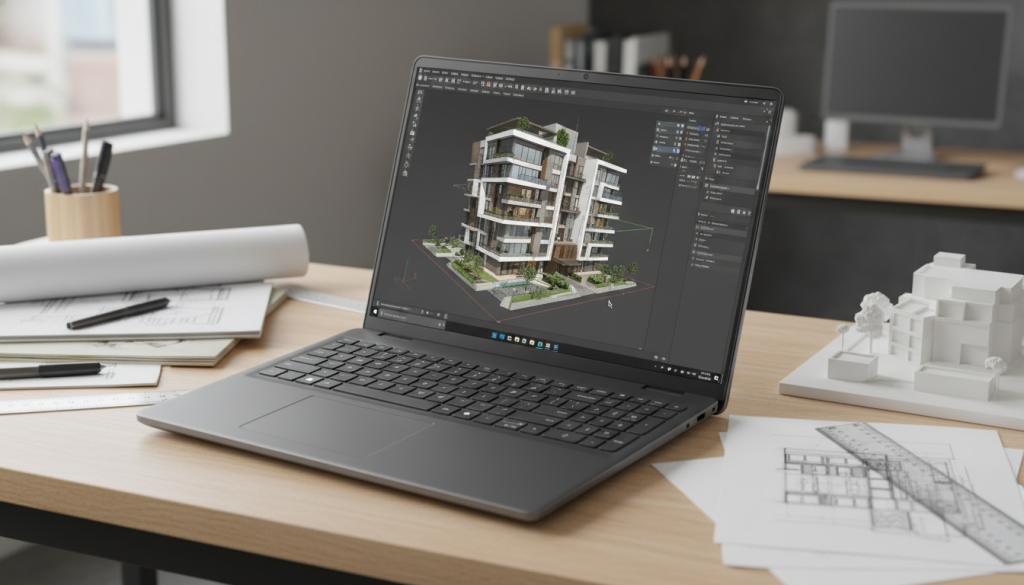
3) Dell 16 Touch (Core 7 150U, 16GB DDR5, 1TB SSD, 16″ FHD+)
Best for
- Light-to-moderate CAD tasks (2D drafting, basic 3D models, smaller assemblies)
- Users who want a more comfortable workspace (16-inch, 16:10) for long sessions
What it’s like in real use
The 16-inch FHD+ (16:10) panel is a genuine quality-of-life upgrade for CAD UI panels and toolbars. Performance will be best for lighter CAD work and moderate multitasking.
Pros
- 16:10 workspace feels better for CAD and documents
- 1TB SSD is great for project files and local storage
- Good “daily driver” balance for office + light creative/CAD
Cons (honest)
- 16GB RAM can be limiting for big assemblies and heavy multitasking
- If graphics are integrated (common in this class), heavy 3D viewports and GPU rendering aren’t its strength
- Sustained export performance depends on cooling and power limits
My take
This is the first one in the list that feels like a comfortable “work + light CAD” machine—still not a dedicated rendering laptop.
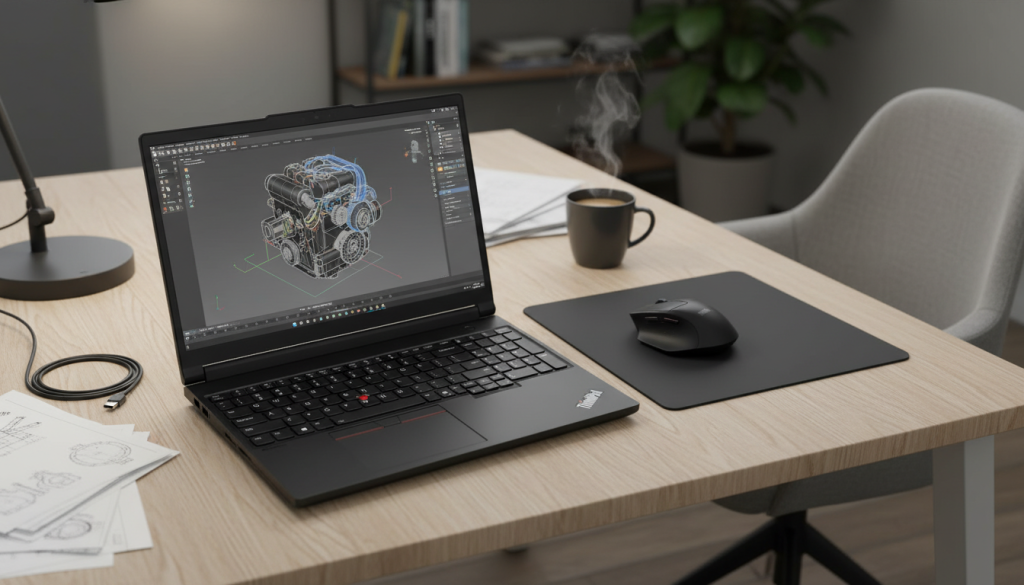
4) Lenovo ThinkPad P16 Gen 3 (Ultra 9 + RTX PRO 2000 8GB, 64GB/2TB)
Best for
- Serious CAD and professional 3D workflows
- GPU rendering or complex scenes where VRAM actually matters
- Long sessions where sustained performance is critical
Why it’s different
This is the only option here that clearly brings:
- Workstation-class GPU with dedicated 8GB VRAM
- High-end CPU tier
- Big RAM and fast storage for heavy projects
- A design typically aimed at stability under sustained loads
Pros
- Best option here for heavy CAD + serious 3D work
- Dedicated VRAM helps large scenes and GPU rendering stability
- 64GB RAM + 2TB storage is ideal for big projects/caches/assets
Cons (honest)
- Workstation laptops can be heavier and louder under full load
- If you only do light CAD, this can be overkill
My take
If CAD/3D is part of your paid work or you render often, this is the only one in the list that truly fits without major compromise.
Optimal choice (overall)
✅ Lenovo ThinkPad P16 Gen 3
Even though it appears last in the list, it’s the most suitable for real 3D rendering and CAD because it has what the others don’t: dedicated workstation GPU + 8GB VRAM + high sustained performance potential.